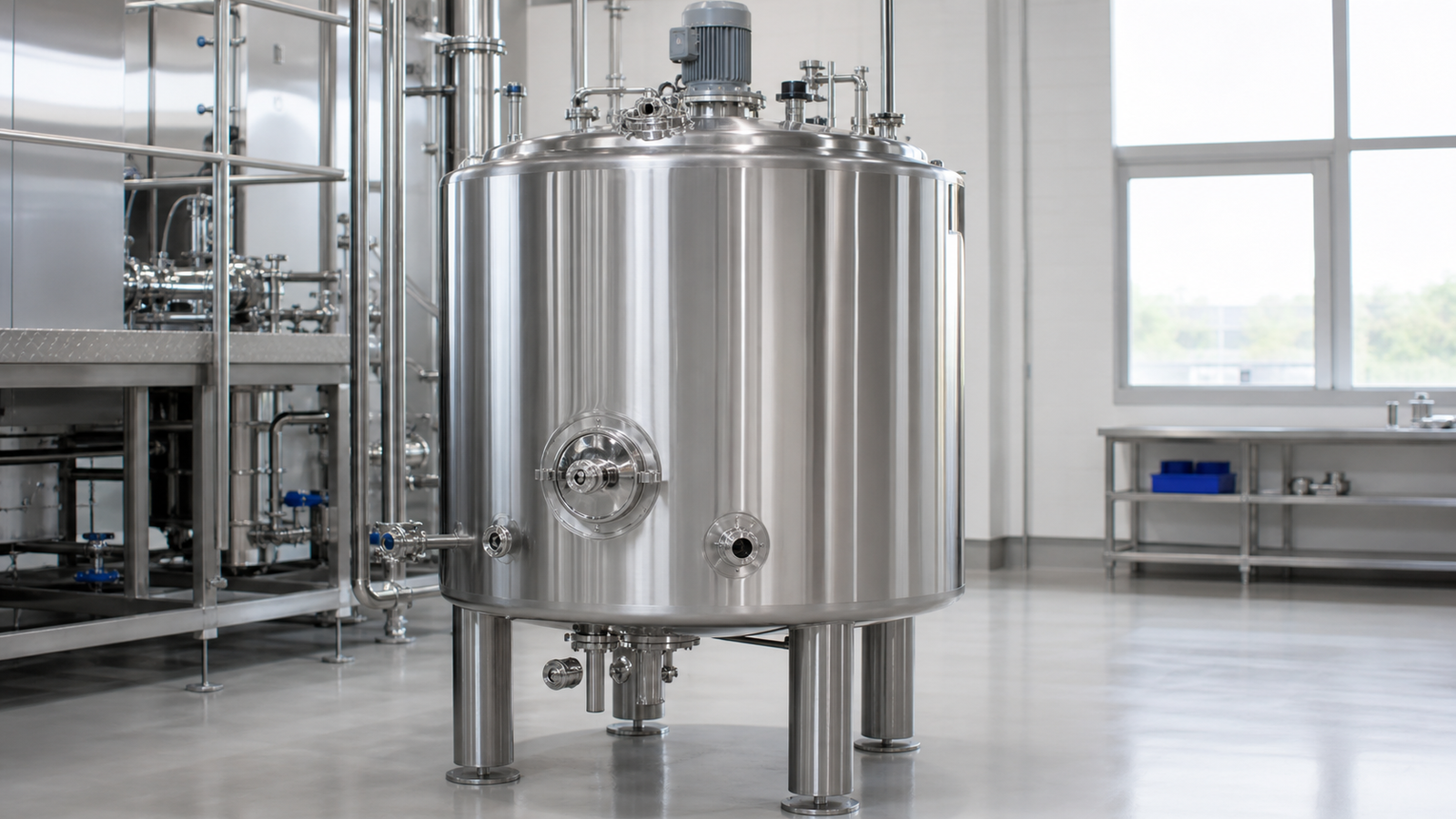
A sanitary stainless steel tank for food, beverage, pharmaceutical, and personal care plants is not just a storage vessel. It is part of the product contact system. If the tank has rough welds, dead legs, poor drainage, or the wrong surface finish, cleaning becomes unreliable. That is where compliance problems usually begin.
One point is worth saying plainly: FDA does not usually “certify” an individual stainless steel tank. FDA rules require equipment used in covered food operations to be designed, constructed, installed, and maintained so it can be cleaned properly and will not contaminate the product. For reference, see the FDA equipment and utensils requirements in 21 CFR 117.40. In practice, the tank design, material selection, welding, polishing, cleaning access, and documentation all have to support sanitary production.
What a sanitary stainless steel tank should include
Most projects start with 304 or 316L stainless steel. For acidic products, chloride exposure, high purity water, or pharmaceutical use, 316L is usually the safer choice because it has better corrosion resistance and lower carbon content for welding.
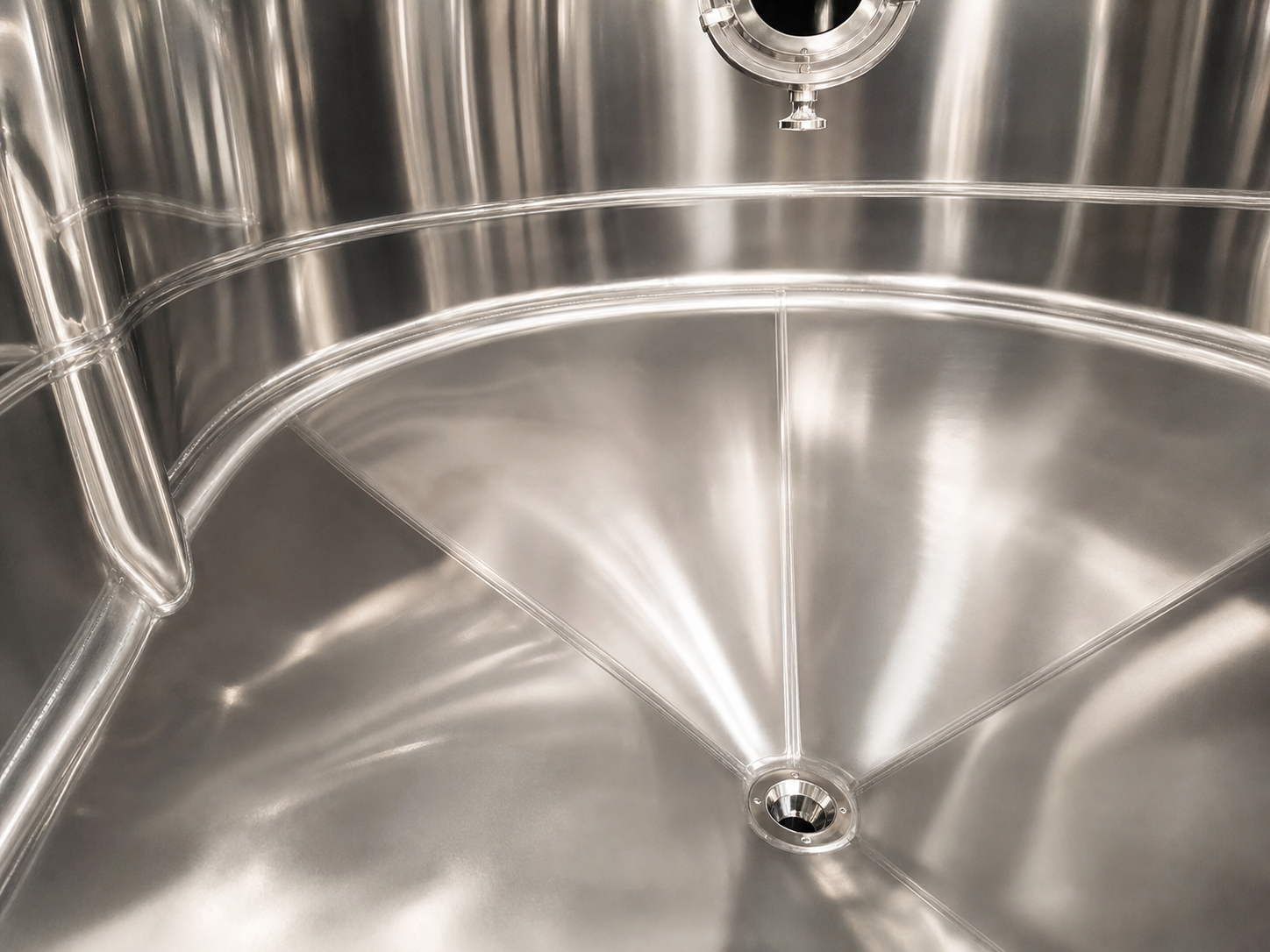
Product contact surfaces should be smooth, non toxic, corrosion resistant, and easy to clean. The exact roughness target depends on the product and process, but many sanitary stainless steel tank projects are specified with internal Ra values around 0.8 micrometer or better. Higher purity applications may call for finer mechanical polishing or electropolishing.
The tank also needs sanitary geometry. Corners should be radiused. Bottoms should drain fully. Nozzles should be short, cleanable, and placed to avoid dead legs. Manways, vents, sample valves, level sensors, spray balls, agitators, and outlet valves all need to be selected as part of the hygienic system, not added at the end.
CIP design matters just as much as the shell. A tank that looks clean from the outside can still fail in production if the spray device cannot reach the shadow areas under the agitator, around baffles, or behind internal fittings. For heated or cooled tanks, the jacket design also affects cleanability, thermal control, and distortion during fabrication.
Where sanitary stainless steel tank production gets difficult
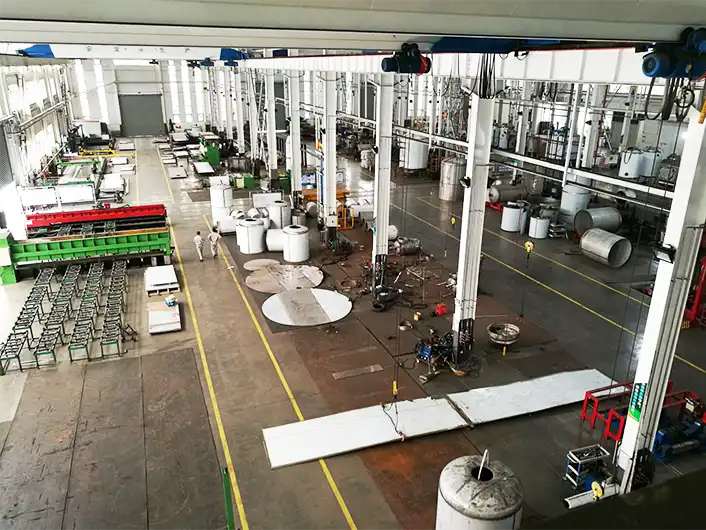
The hardest part is usually not cutting and rolling the shell. It is keeping the sanitary details consistent through the whole build.
Welding is the first risk. Heat tint, undercut, pinholes, incomplete penetration, and rough grinding marks can all create places where residue or bacteria can remain after cleaning. Even a small defect becomes more serious when the tank handles viscous products, proteins, sugars, or active ingredients.
Polishing is another common bottleneck. A drawing may call for a specific finish, but the actual result depends on weld preparation, abrasive sequence, worker skill, inspection angle, and whether the surface is checked before passivation. Over polishing can thin the material or distort small fittings. Under polishing leaves scratches where product can hold.
Drainage is easy to underestimate. A tank can meet the drawing and still leave liquid in a low point if the outlet elevation, bottom slope, nozzle orientation, or frame leveling is wrong. That leftover liquid affects cleaning validation and can shorten product shelf life.
Agitator and accessory integration also need attention. A sanitary tank often has load cells, jackets, insulation, sight glasses, pressure or vacuum protection, temperature probes, and control wiring. Each added part creates another joint, weld, seal, or cleaning challenge.
Documentation is the last difficulty, and it often causes delays near shipment. Buyers may need material certificates, weld maps, polishing records, roughness reports, pressure test records, passivation records, FAT documents, and user manuals. If the factory waits until the end to collect these, the paperwork becomes harder than the tank.
How we build sanitary stainless steel tanks
Our approach starts with the product and cleaning method, not just the tank volume. We review viscosity, temperature, pH, cleaning chemicals, batch cycle, pressure or vacuum conditions, and available plant utilities. Then we confirm the stainless grade, wall thickness, finish requirement, nozzle layout, agitator type, jacket type, and CIP coverage before fabrication.
During production, we control the details that affect hygiene:
- 304 or 316L stainless steel selected according to product risk and cleaning chemistry
- Sanitary weld preparation with internal weld finishing where product contact requires it
- Smooth internal transitions, radiused corners, and cleanable nozzle design
- Sloped bottoms and outlet placement designed for full drainage
- Mechanical polishing, optional electropolishing, and passivation according to the specification
- Inspection of critical welds, surface finish, leakage, pressure, and drainage before shipment
- Documentation packages prepared during the build, not after the tank is complete
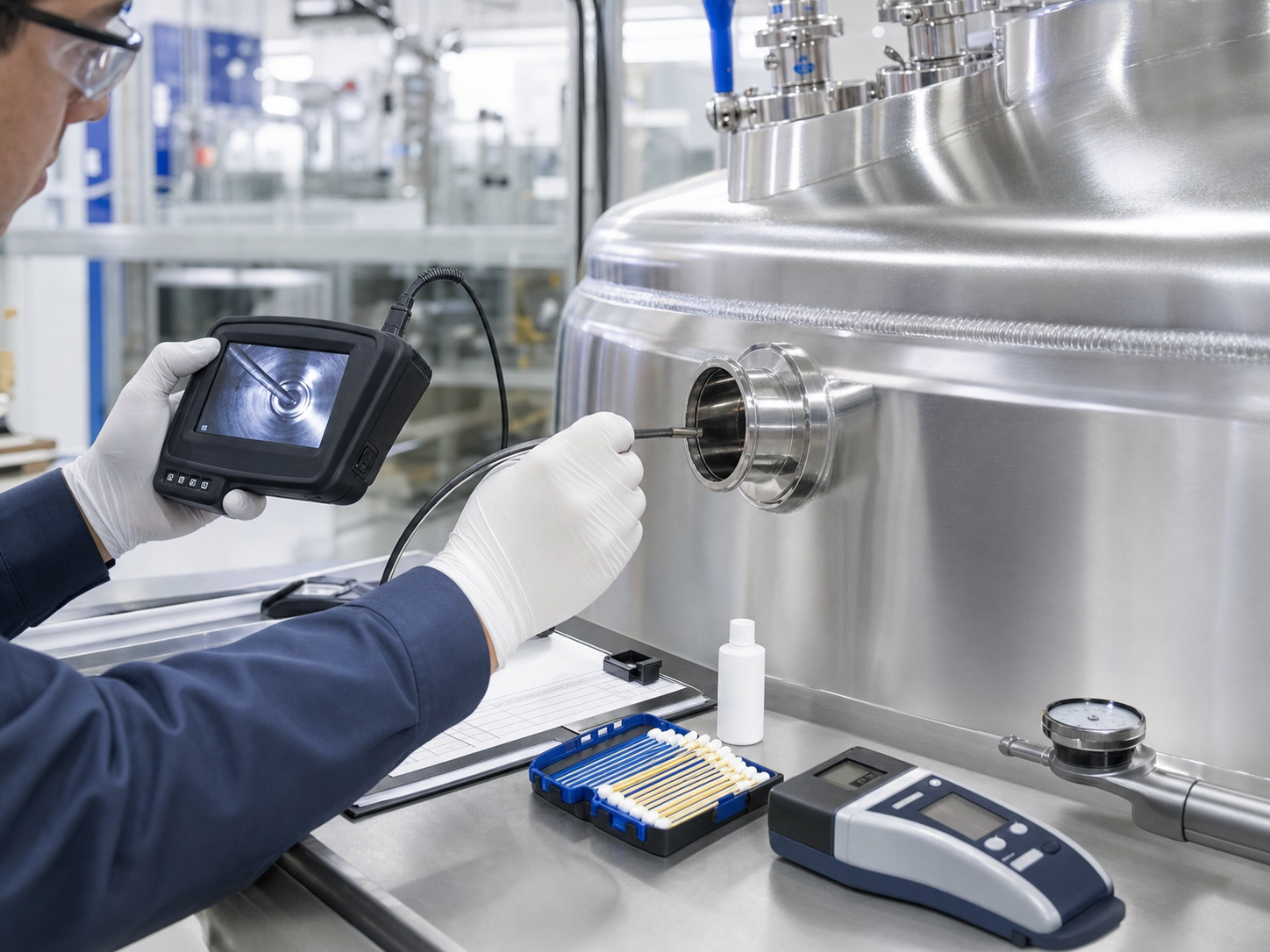
We can also support project specific requirements such as CIP spray coverage checks, agitator selection, jacket heating or cooling, insulation, load cell installation, sanitary valves, clean vents, and automation interfaces. For related process systems, see our ethanol extraction and CBD extraction equipment.
A good sanitary stainless steel tank should not make operators work around the equipment. It should clean predictably, drain completely, and give the quality team the records they need. That is the standard we design toward: a tank that fits the process, passes inspection, and behaves well after it is installed.
about
PureyMech
Optimizing industry solutions & production with experience, expertise and excellence. Globally trusted manufacturing hub.